
THE ORIGINAL GUIDE
Foundation Breath
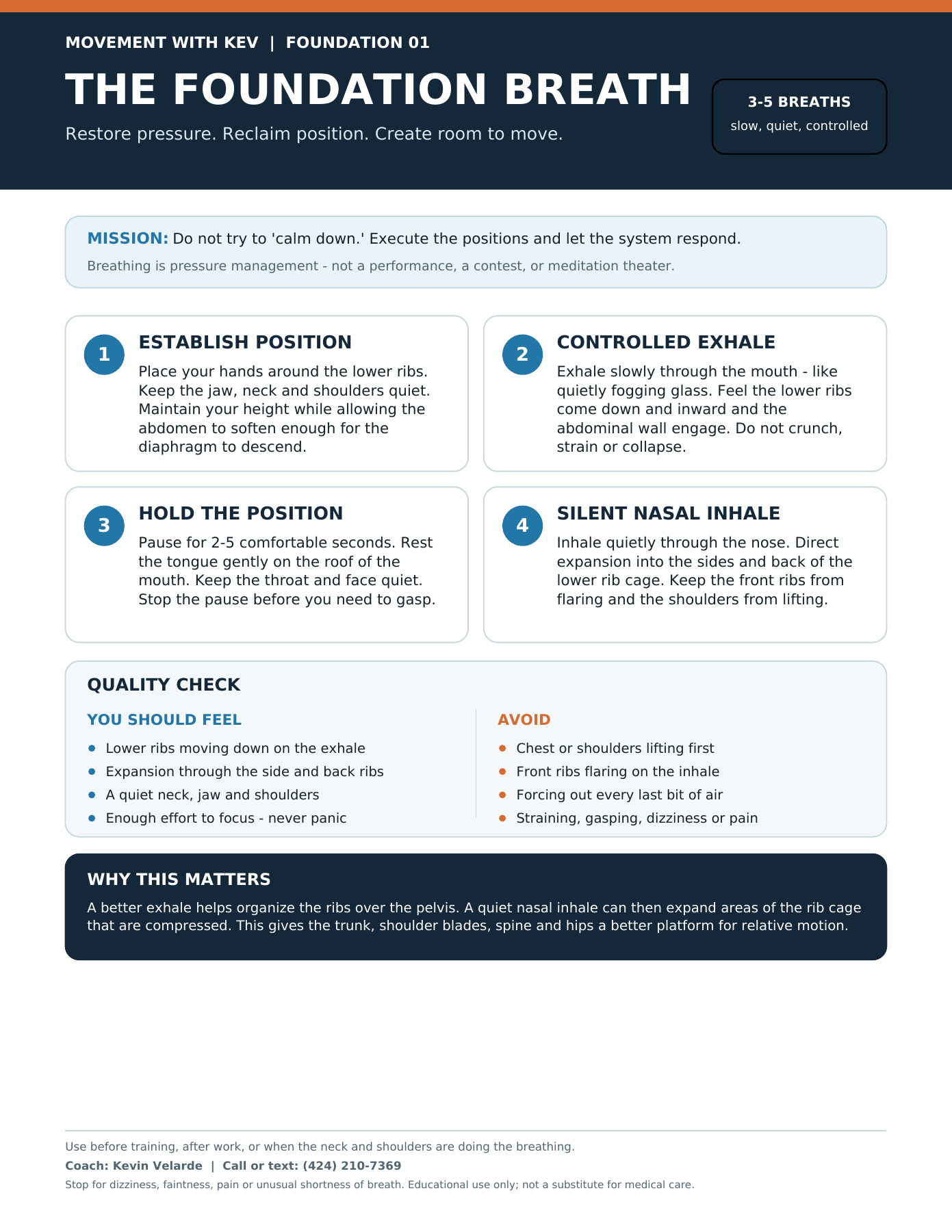
Your guide is open below. Tap the page to enlarge, or open the PDF for a closer look.
Read the accessible text version
About this text edition
Text reproduced from the uploaded document. This text view does not reproduce original illustrations, color coding, or page layout. The original layout is displayed above. Table columns in the extracted text may not retain their relationships.
Source page 1
MOVEMENT WITH KEV | FOUNDATION 01
THE FOUNDATION BREATH
Restore pressure. Reclaim position. Create room to move.
3-5 BREATHS
slow, quiet, controlled
MISSION: Do not try to 'calm down.' Execute the positions and let the system respond.
Breathing is pressure management - not a performance, a contest, or meditation theater.
1
ESTABLISH POSITION
Place your hands around the lower ribs.
Keep the jaw, neck and shoulders quiet.
Maintain your height while allowing the
abdomen to soften enough for the
diaphragm to descend.
2
CONTROLLED EXHALE
Exhale slowly through the mouth - like
quietly fogging glass. Feel the lower ribs
come down and inward and the
abdominal wall engage. Do not crunch,
strain or collapse.
3
HOLD THE POSITION
Pause for 2-5 comfortable seconds. Rest
the tongue gently on the roof of the
mouth. Keep the throat and face quiet.
Stop the pause before you need to gasp.
4
SILENT NASAL INHALE
Inhale quietly through the nose. Direct
expansion into the sides and back of the
lower rib cage. Keep the front ribs from
flaring and the shoulders from lifting.
QUALITY CHECK
YOU SHOULD FEEL
Lower ribs moving down on the exhale
Expansion through the side and back ribs
A quiet neck, jaw and shoulders
Enough effort to focus - never panic
AVOID
Chest or shoulders lifting first
Front ribs flaring on the inhale
Forcing out every last bit of air
Straining, gasping, dizziness or pain
WHY THIS MATTERS
A better exhale helps organize the ribs over the pelvis. A quiet nasal inhale can then expand areas of the rib cage
that are compressed. This gives the trunk, shoulder blades, spine and hips a better platform for relative motion.
Use before training, after work, or when the neck and shoulders are doing the breathing.
Coach: Kevin Velarde | Call or text: (424) 210-7369
Stop for dizziness, faintness, pain or unusual shortness of breath. Educational use only; not a substitute for medical care.
Educational study material. Not medical diagnosis, treatment, or individualized exercise clearance.