
DOCUMENT LIBRARY
Original file preserved as uploaded.
REFORMATTED SOURCE REFERENCE
The gait sequence
Follow the highlighted right leg. The images show visible walking events; the expandable notes retain your course model. Its percentages use a different grouping from the usual gait cycle, where toe-off separates stance from swing. The artwork uses event names rather than those percentages.
Organized from the extracted document text for easier study. These are the source’s model descriptions; the original PDFs are freely available below.
01 / Heel contact
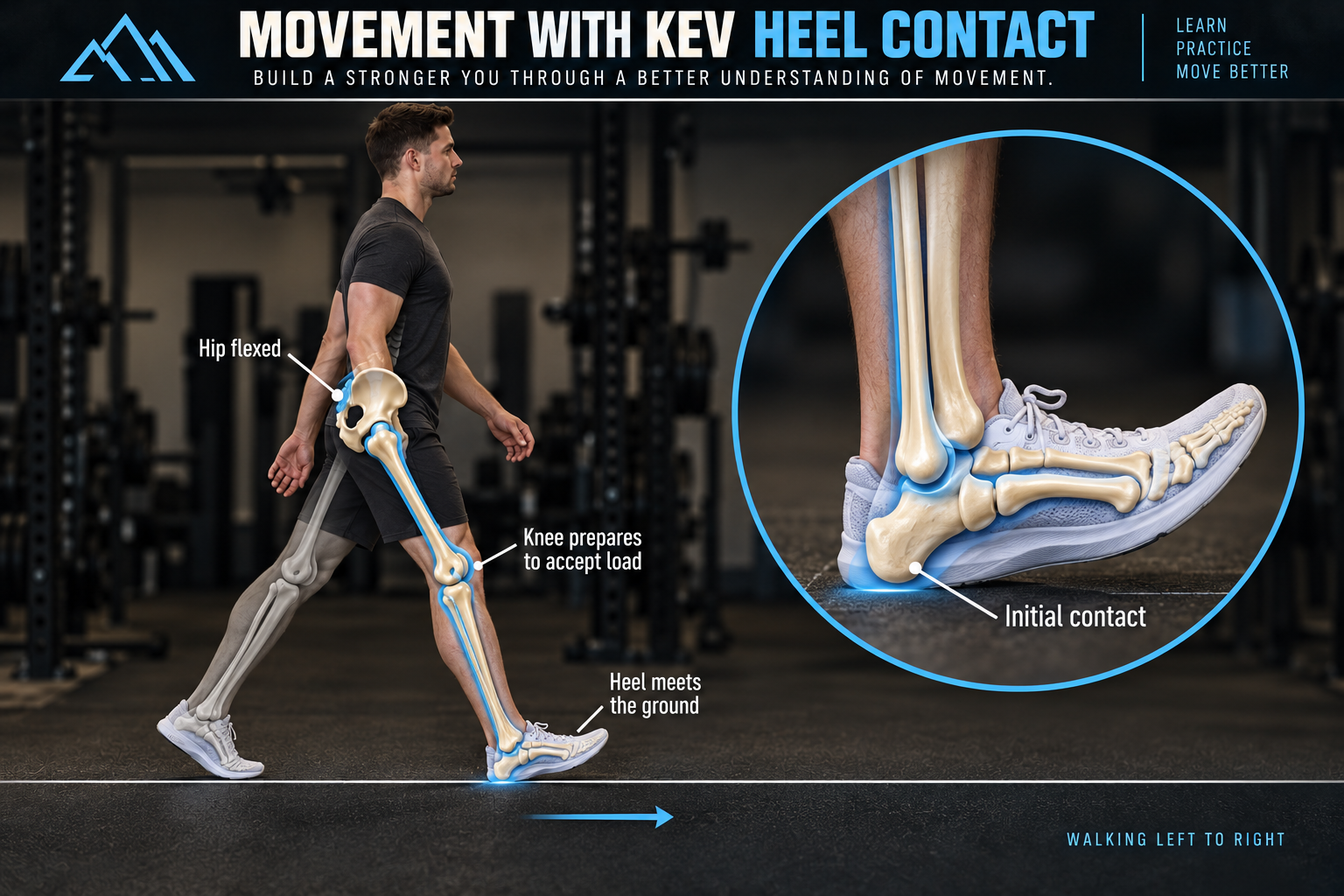
HEEL STRIKE 0%
- Pelvis orientation
- Turned away from stance leg
- Sacrum
- Counternutated
- Innominate
- Externally rotated
- Hip joint
- Externally rotated
- Femur
- Externally rotated
- Tibia
- Externally rotated
- Ankle
- Plantarflexed
- Foot + big toe
- Supinated; big toe spread outward
02 / Heel contact → foot flat
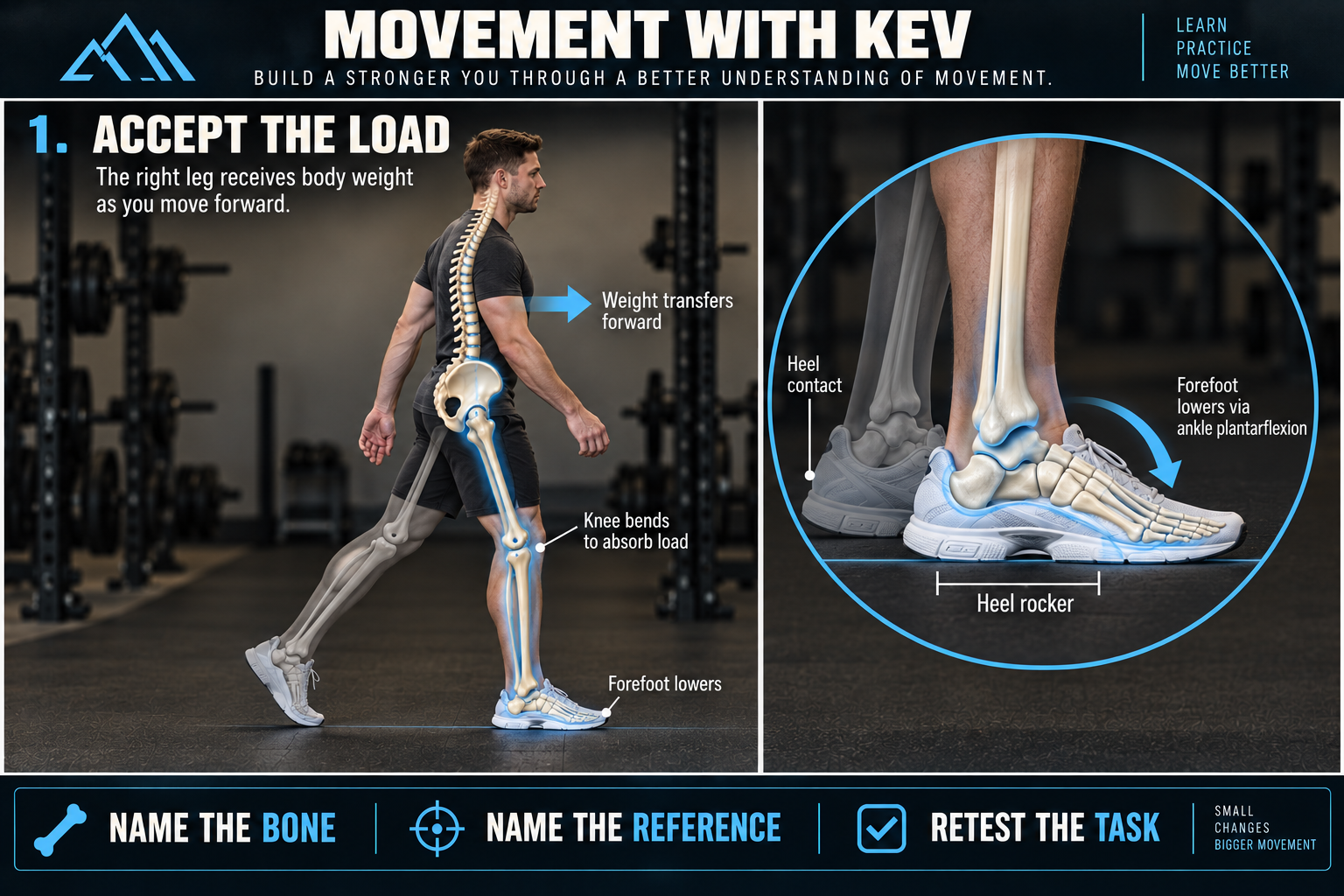
HEEL STRIKE TO FOOT FLAT 0–20%
- Pelvis orientation
- Turns farther away
- Sacrum
- Nutates from counternutation
- Innominate
- Internally rotates from ER
- Hip joint
- Externally rotates from ER*
- Femur
- Internally rotates from ER
- Tibia
- Internally rotates from ER
- Ankle
- Dorsiflexes from plantarflexion
- Foot + big toe
- Pronates from supination; big toe spreads
03 / Foot flat → midstance
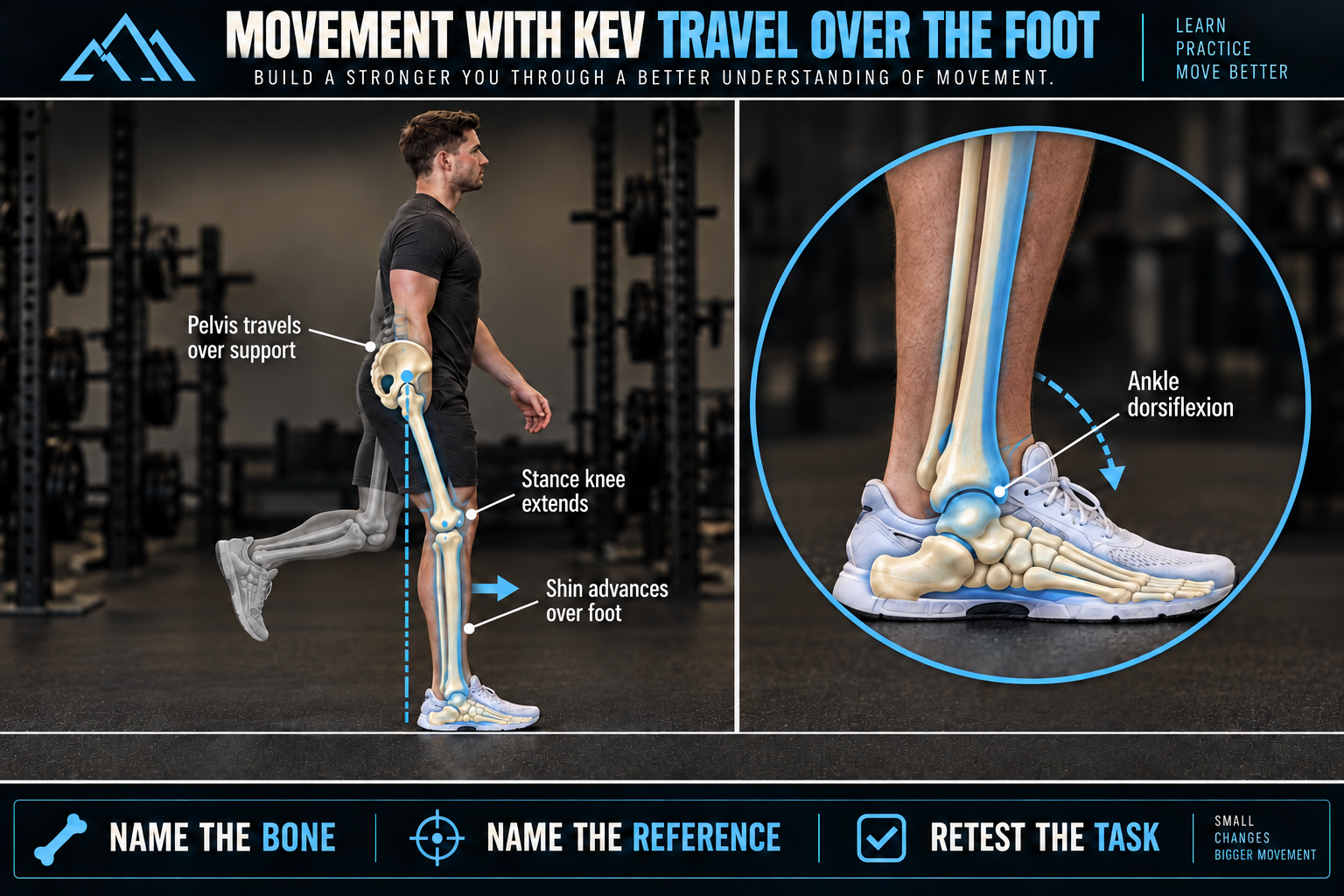
FOOT FLAT TO MIDSTANCE 20–40%
- Pelvis orientation
- Turns toward stance leg
- Sacrum
- Counternutates from nutation
- Innominate
- Externally rotates from IR
- Hip joint
- Internally rotates from ER*
- Femur
- Externally rotates from IR
- Tibia
- Externally rotates from IR
- Ankle
- Plantarflexes from dorsiflexion
- Foot + big toe
- Supinates from pronation; big toe moves toward 2nd
04 / Late stance → toe-off
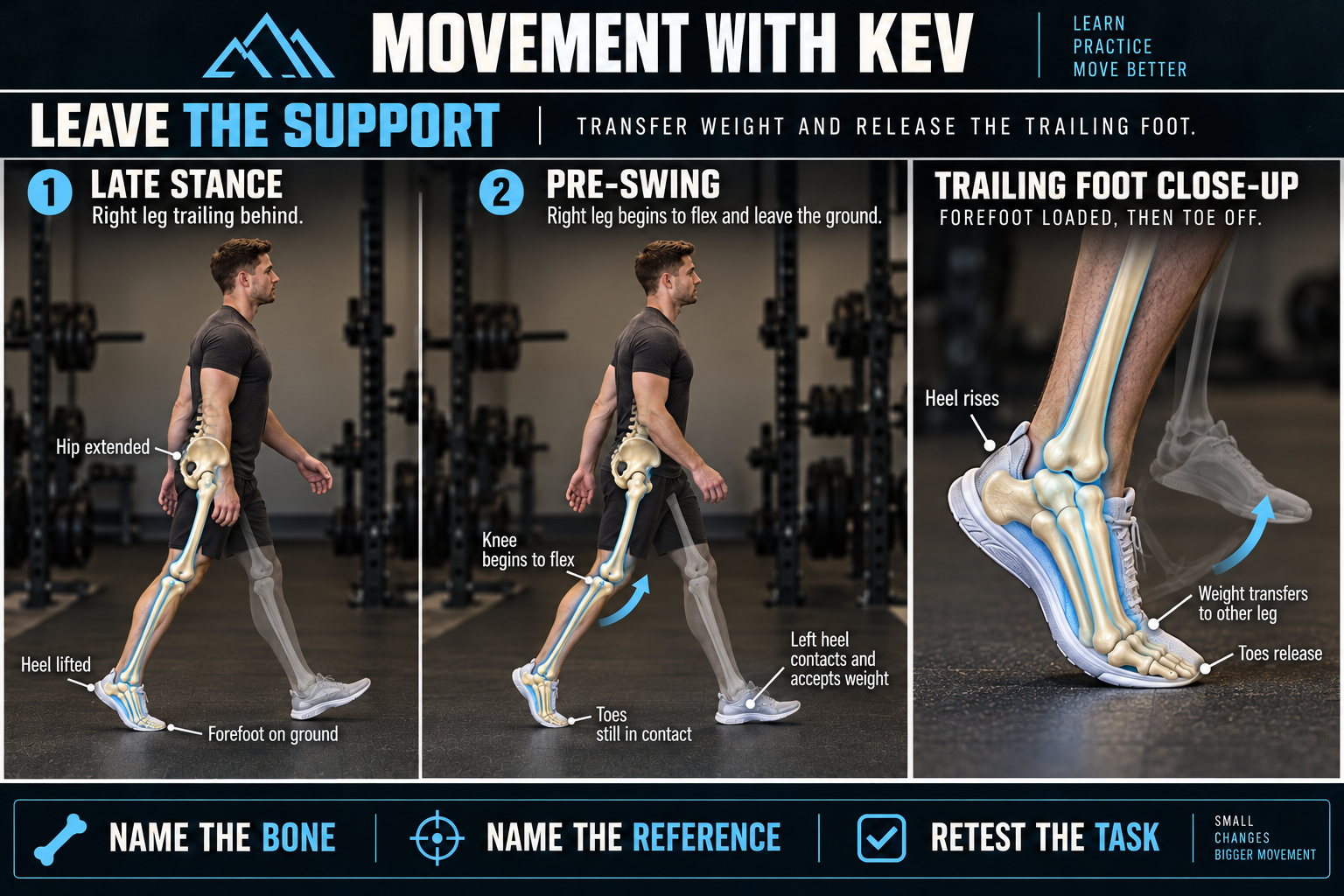
MIDSTANCE TO LATE STANCE 40–50%
- Pelvis orientation
- Turns farther toward stance leg
- Sacrum
- Continues counternutating
- Innominate
- Continues externally rotating
- Hip joint
- Continues internally rotating*
- Femur
- Continues externally rotating
- Tibia
- Continues externally rotating
- Ankle
- Continues plantarflexing
- Foot + big toe
- Continues supinating; big toe hugs 2nd
05 / Swing → next contact
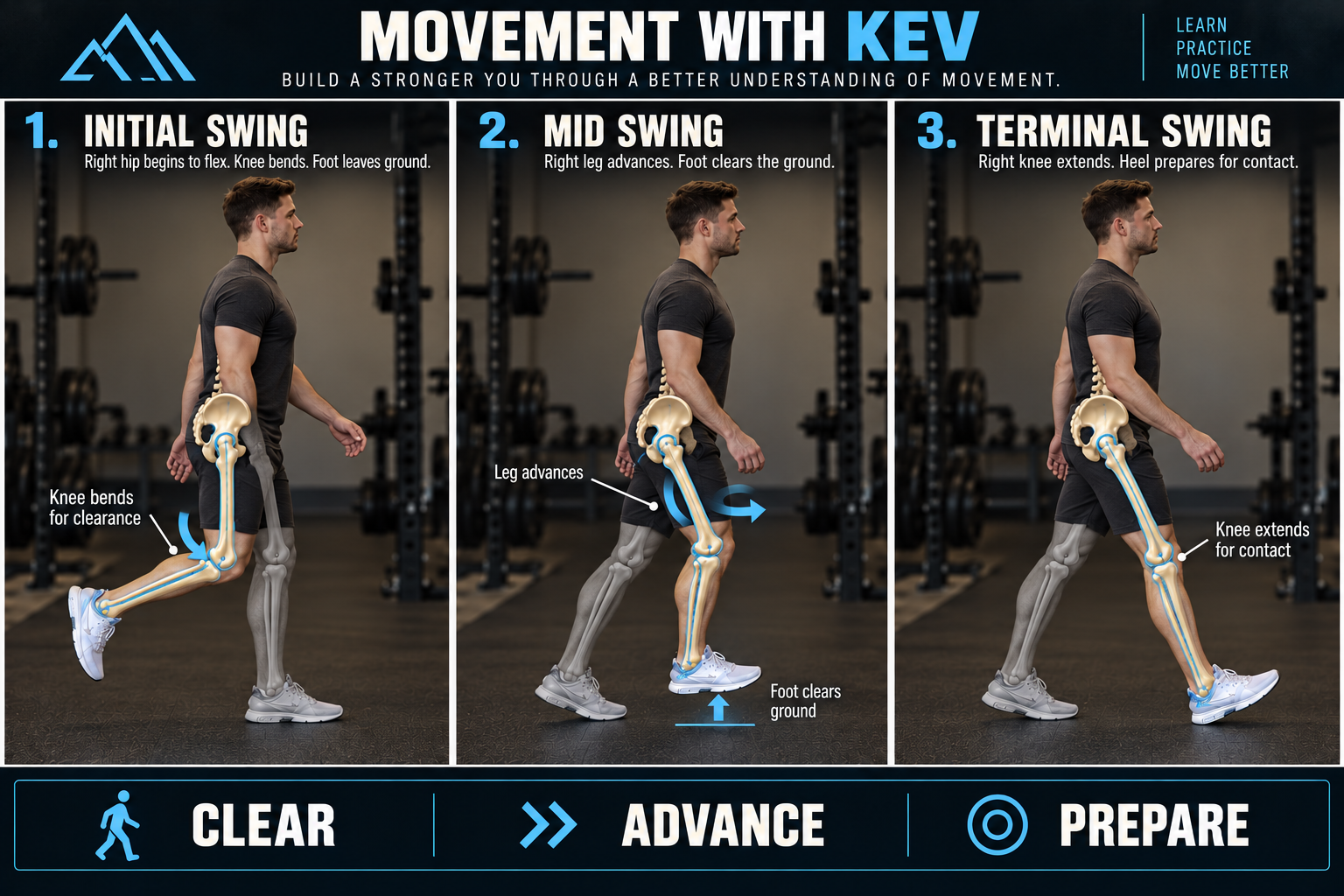
SWING 50–100%
- Pelvis orientation
- Turns away from previous stance leg
- Sacrum
- Slowly nutates
- Innominate
- Slowly internally rotates
- Hip joint
- Slowly externally rotates*
- Femur
- Slowly internally rotates
- Tibia
- Slowly internally rotates
- Ankle
- Slowly dorsiflexes
- Foot + big toe
- Foot stays relatively supinated; toe N/A
Loading: sacrum nutates; innominate, femur and tibia move toward IR; foot pronates. Propulsion: the sequence reverses toward ER and supination.
Orientation = pelvis turning as a unit. Relative motion = individual segments rotating within the chain. ER / IR = external / internal rotation.
*Hip joint rotation is the pelvis-on-femur description in the course chart; it may read opposite the femur's rotation in space.
Course-model study aid. Source: Conor Harris, Week 2 gait slides and Lower Body Joint Actions table. MOVEMENT WITH KEV • COHORT STUDY
Text reproduced from the uploaded document. This text view does not reproduce original illustrations, color coding, or page layout. Use the document links above to view the original layout. Table columns in the extracted text may not retain their relationships.
Source page 1
Educational study material. Not medical diagnosis, treatment, or individualized exercise clearance.